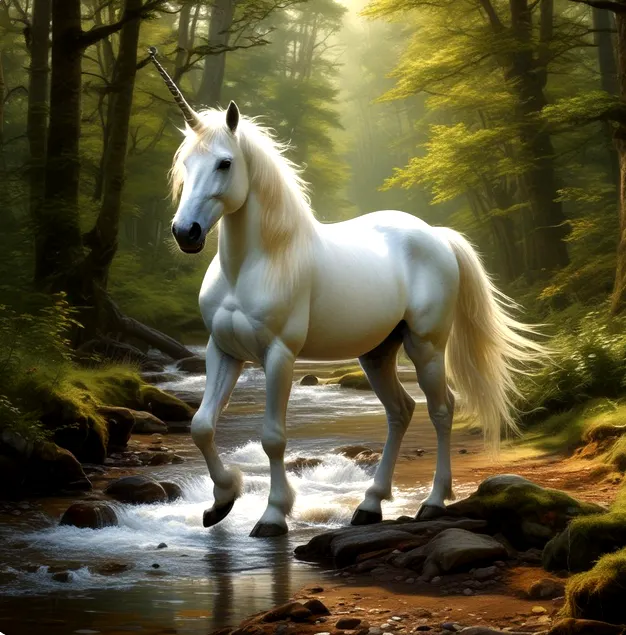
Choosing Mythological Purity Over Terrestrial Predators
While most sovereign territories select native apex predators—such as lions, eagles, or bears—to symbolize national strength, Scotland stands apart by holding the unicorn as its official national animal.
First adopted into Scottish royal heraldry during the 12th century, this mythical creature represented chivalry, fiercely guarded independence, and untamable martial pride in Celtic mythology.
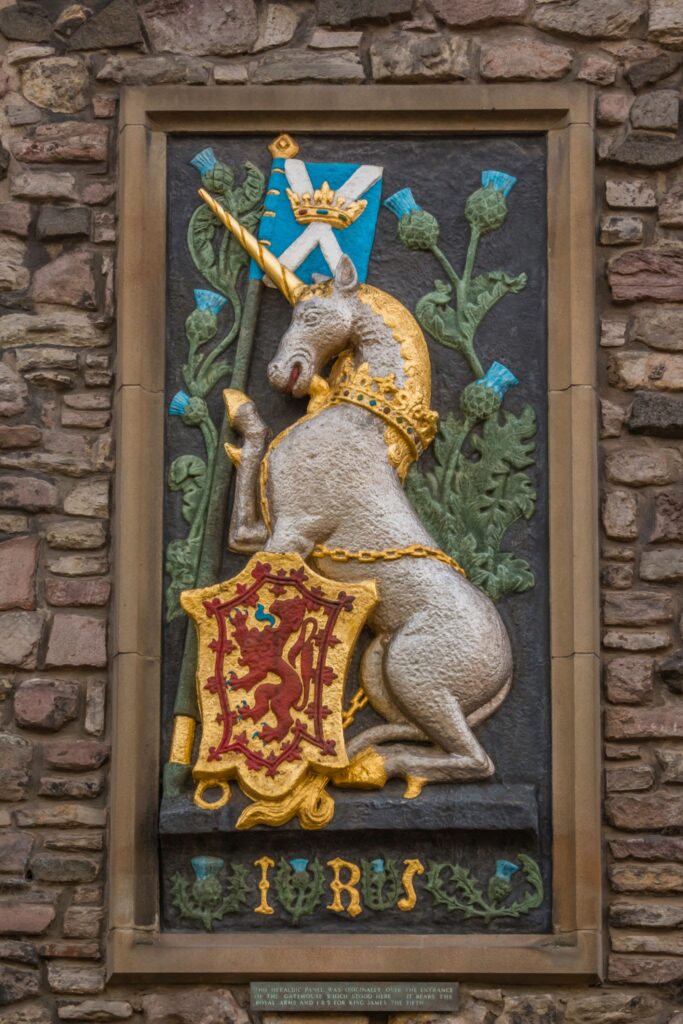
Scottish royal coat of arms heraldic unicorn. Source: Richard T. Nowitz / Getty Images
The Heraldic Roots of the Scottish Unicorn
Promoting the unicorn as a royal emblem gained momentum under King William I in the late 1100s, but it was King Robert III who formally incorporated the creature into the official Royal Arms of Scotland in the late 14th century.
By the 15th century, during the reigns of James III and James IV, Scottish gold coins (the Unicorn and Half-Unicorn) depicted the creature prominently. Prior to the Union of the Crowns, the official Scottish Royal Coat of Arms was supported by two crowned, chained unicorns holding the Saltire flag.
Why Is the Heraldic Unicorn Always Chained?
Observing traditional Scottish heraldic carvings reveals a heavy golden chain wrapped around the unicorn’s neck and body.
In medieval folklore, a wild unicorn was considered the most hazardous beast in existence—an animal so powerful and fierce that only a virtuous maiden or a great king could tame it.
The chain does not signify subjugation; rather, it symbolizes the immense power of the Scottish monarchs who possessed the strength to bind and control such a dangerous national guardian.
The Union of the Crowns: Lion Meets Unicorn
When King James VI of Scotland inherited the English throne in 1603 as James I, the heraldic traditions of both realms merged:
- The Royal Coat of Arms Shift: To reflect the diplomatic union between Scotland and England, the heraldic arrangement replaced one Scottish unicorn with the English Lion.
- Regional Precedence: In modern British heraldry used within Scotland, the unicorn sits on the left (dexter) side wearing a royal crown. In versions used outside Scotland, the English lion occupies the left position while the Scottish unicorn stands on the right un-crowned.
Heraldic Sources & Historical Archives
- The Court of the Lord Lyon: Official Scottish Heraldic Register
- National Library of Scotland: History of the Scottish Royal Arms and Coinage
- Society of Antiquaries of Scotland: Mythological Symbolism in Medieval Scottish Architecture