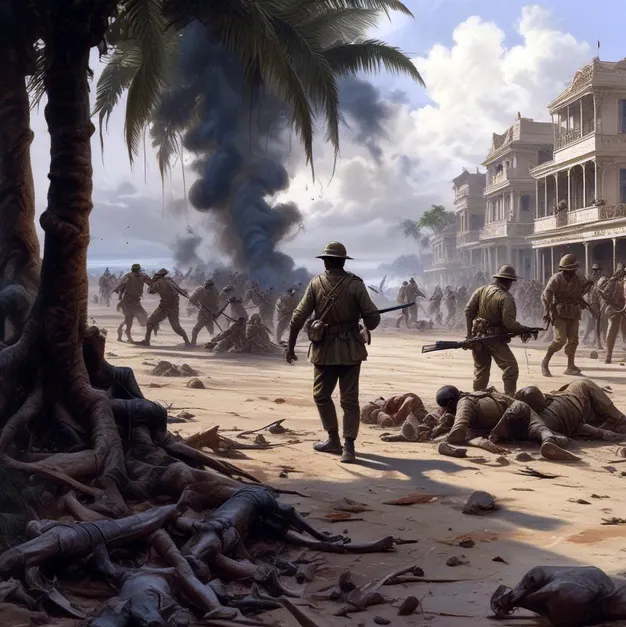
Measuring Conflict Duration in Minutes Rather Than Years
Military engagements spanning decades or generations dominate historical archives, yet the shortest recorded sovereign conflict in history concluded before a single hour elapsed. Fought on the morning of August 27, 1896, the Anglo-Zanzibar War lasted between 38 and 45 minutes, ending in a decisive victory for the British Royal Navy against the forces of the Zanzibar Sultanate.
The Succession Crisis That Triggered the Ultimatums
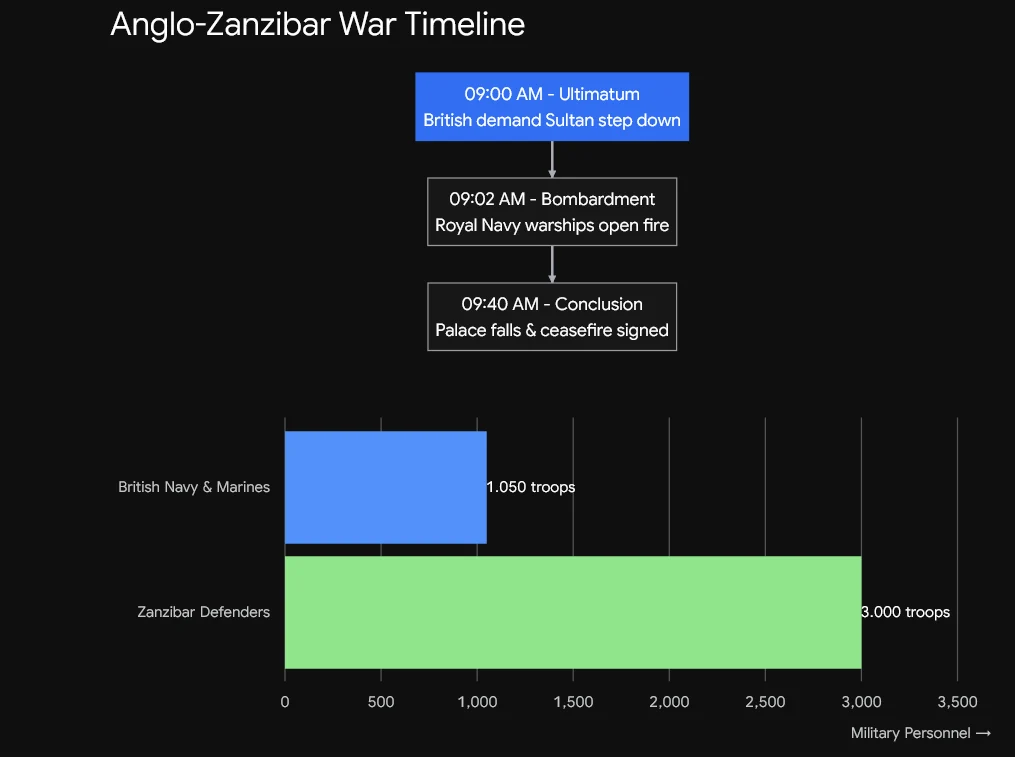
Tensions erupted following the sudden death of pro-British Sultan Hamad bin Thuwaini on August 25, 1896. His cousin, Khalid bin Barghash, immediately seized power in the royal palace without obtaining approval from the British consul—violating an 1886 treaty requiring incoming sultans to secure British diplomatic clearance.
The British government issued an immediate ultimatum: Sultan Khalid and his forces were ordered to vacate the palace grounds and surrender their weapons by 9:00 AM on August 27, or face direct military action.
Khalid refused to comply, barricading himself inside the seafront palace complex with roughly 3,000 defenders and several shore-mounted artillery pieces.
Forty-Five Minutes of Concentrated Naval Shelling
When the 9:00 AM deadline expired with no surrender, Rear-Admiral Harry Rawson ordered the British squadron anchored in Zanzibar Harbor to commence firing:
- 09:02 AM: British warships opened a concentrated barrage against the wooden palace structure and shore batteries.
- 09:05 AM: The Zanzibari armed yacht HHS Glasgow fired on British ships and was swiftly sunk by high-explosive return fire from HMS St George.
- 09:35 AM: Heavy naval shells pulverized the palace interior, setting the structures ablaze and knocking out the defenders’ shore artillery.
- 09:40 AM: The royal flag flying over the burning palace was shot down, signaling formal surrender and ending active combat.
The Aftermath and Political Imperial Consequences
Sultan Khalid fled to the nearby German consulate during the early minutes of the bombardment, eventually receiving political asylum in German East Africa.
The British immediately installed Sultan Hamud bin Muhammad as a compliant ruler, consolidating their protectorate control over Zanzibar until the island’s eventual independence decades later.
With roughly 500 Zanzibari casualties against just one injured British sailor, the Anglo-Zanzibar War remains the most asymmetrical and briefest recorded military conflict in sovereign history.
Historical Records & Military Archives
- The London Gazette: Official Naval Dispatches on the Zanzibar Operations (1896)
- UK National Archives: Foreign Office Records (FO 84) – Zanzibar Protectorate Correspondence
- Journal of Imperial and Commonwealth History: The 1896 Anglo-Zanzibar Conflict Analysis