
Your Fingerprints Were Basically Finished Before You Were Born
Formed Early, Locked In for Good
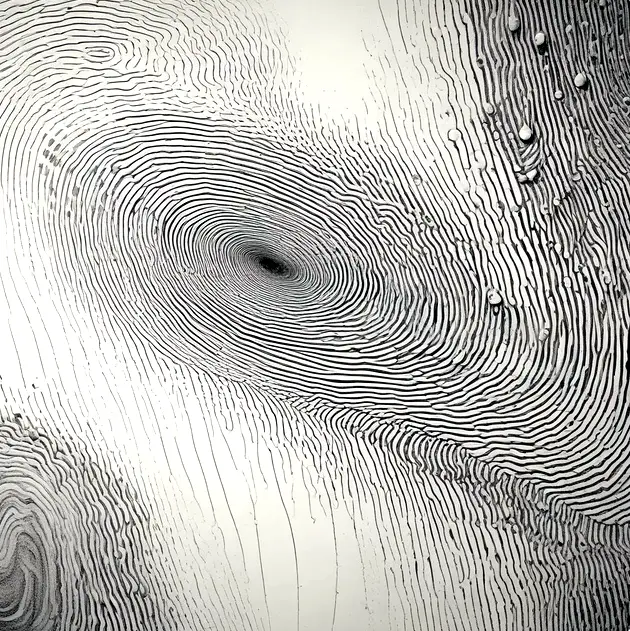
Fingerprints develop remarkably early in human life, forming while a fetus is still in the womb, generally settling into their final pattern somewhere between the thirteenth and nineteenth week of gestation. Once that pattern is established, it stays essentially fixed for the rest of a person's life, the same ridges, loops, whorls, and arches present at birth remain structurally the same decades later, just scaled up as the rest of the hand grows. This isn't really a coincidence or a lucky biological accident, it comes down to exactly where in the skin those patterns are physically encoded.
The Pattern Lives Deeper Than the Skin You Can See
Fingerprint ridges aren't just a surface feature sitting on top of the skin, they're formed by the structure of the dermis, the deeper layer of skin sitting beneath the visible outer surface, called the epidermis. The dermis contains a specific structure called the basal layer, and it's the folding pattern of this layer, formed during early fetal development, that ultimately determines the ridge pattern appearing on the surface of the skin above it. Because this pattern originates in a deeper structural layer rather than the surface skin that's constantly shedding and regenerating, fingerprints remain stable even as the outer layer of skin continuously renews itself throughout a person's lifetime.
Why Superficial Skin Damage Doesn't Erase a Fingerprint
This deeper origin explains something that often surprises people, minor cuts, scrapes, or general surface wear to a fingertip typically don't permanently alter a fingerprint at all. As long as the damage doesn't reach deep enough to disrupt the basal layer of the dermis itself, the skin heals and regrows following the exact same underlying ridge pattern that was already encoded structurally beneath the surface. This is part of why fingerprints remain reliable for identification purposes even on people who work extensively with their hands, construction workers, manual laborers, musicians who develop calluses, since the underlying structural pattern generating those ridges typically survives surface-level wear that would seem, at first glance, like it should meaningfully alter or erase the print.
What Actually Can Change a Fingerprint Permanently
Fingerprints aren't entirely immune to change, deep enough injuries, ones that penetrate through the epidermis and genuinely damage or scar the dermis and its basal layer, can permanently alter or even eliminate a fingerprint pattern in the affected area, since the underlying structural template responsible for generating the ridge pattern has itself been damaged rather than simply worn away at the surface. Severe burns, deep lacerations, or certain skin conditions and diseases affecting the dermis can produce this kind of permanent alteration, which is why forensic identification sometimes accounts for scarring patterns specifically, since a scar disrupting a fingerprint can actually become its own distinguishing, permanent feature in its own right.
Why Even Identical Twins Don't Share Fingerprints
Fingerprint formation during fetal development isn't purely dictated by genetics either, which explains why even identical twins, who share essentially identical DNA, still end up with distinctly different fingerprint patterns from each other. The specific ridge patterns that form are influenced by a combination of genetic factors and highly localized conditions inside the womb during early development, including subtle variations in amniotic fluid pressure, the exact position of a developing fetus, and minor differences in how quickly specific areas of skin grow relative to surrounding tissue. These small, essentially random developmental variations mean that fingerprint formation involves enough unpredictable environmental influence, even within the womb, that no two people, not even genetically identical twins, end up with exactly matching prints.
Fingerprints Grow Larger, But the Pattern Itself Doesn't Change
As a person grows from infancy through adulthood, fingerprints do increase in overall physical size, simply because the entire hand grows larger along with the rest of the body. This size increase doesn't alter the underlying ridge pattern's actual structure or arrangement, though, a specific whorl or loop present on a person's fingertip as an infant remains recognizably the same pattern, just larger in scale, throughout the rest of that person's life, which is exactly why forensic and biometric identification systems remain reliable across decades rather than needing to account for patterns shifting meaningfully over time the way other physical characteristics, height, weight, facial structure, clearly do.
Why This Stability Makes Fingerprints So Useful for Identification
This lifelong structural stability is really the entire reason fingerprints became such a foundational tool for identification purposes in the first place, both in law enforcement and, more recently, in everyday biometric security systems like smartphone fingerprint scanners. A form of identification that could shift or change meaningfully over months or years would be considerably less useful for long-term identification purposes, fingerprints work specifically because the underlying biological mechanism generating them locks in early and resists meaningful alteration for the remainder of a person's natural life, barring the kind of deep, structural skin damage capable of actually disrupting the dermis itself.
A Rare Case of Biological Permanence
Fingerprints end up being a fairly unusual case within human biology, a physical characteristic established before birth that then remains essentially unchanged for potentially eighty, ninety, or more years afterward, largely immune to the ordinary wear, aging, and gradual physical change affecting nearly everything else about the human body over a comparable timespan. It's a quiet reminder that not every physical trait is subject to the same slow drift most of the body experiences with age, some patterns, once set deep enough beneath the surface early in development, simply stay exactly where they were formed for the rest of a lifetime.