
What Actually Separates These Instruments From the Rest of the Woodwind Section
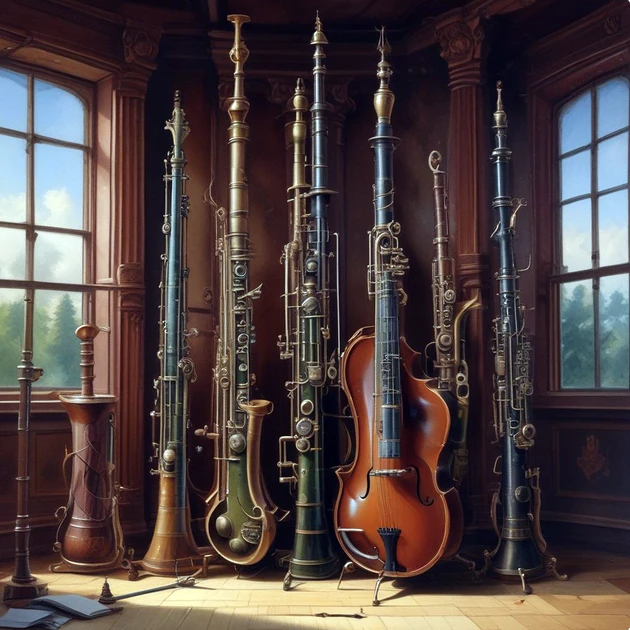
Instrument classification in orchestral music tends to follow reasonably intuitive logic once you understand the underlying categories, but the double reed family has a habit of confusing people who assume every woodwind instrument works roughly the same way. The oboe, bassoon, and English horn all belong to this family, a specific subgroup within the broader woodwind section defined not by size, range, or general shape, but by one very particular detail in how each instrument actually produces sound.
Most people's mental image of a woodwind reed, if they have one at all, probably resembles a clarinet or saxophone, a single, flat piece of cane vibrating against a fixed mouthpiece to generate sound. Double reed instruments work through a genuinely different mechanism entirely. Rather than a single reed vibrating against a solid mouthpiece, double reed instruments use two separate pieces of cane, bound tightly together and shaped so that a narrow gap remains between them, with sound produced by air forcing its way through that tiny opening, causing both reed pieces to vibrate rapidly against each other rather than against any fixed surface at all.
This mechanical difference has real consequences for how these instruments actually feel and sound, both to play and to listen to. Double reeds generally require considerably more air pressure and physical effort to produce sound compared to single reed instruments, since the player is essentially forcing air through a genuinely narrow gap between two vibrating pieces of cane rather than pushing air past one reed vibrating freely against a solid mouthpiece surface. This added resistance is part of why double reed instruments have a reputation among musicians for being physically demanding to play, oboists and bassoonists frequently describe needing significantly more sustained breath control and embouchure strength compared to musicians playing single reed instruments of comparable range and complexity.
The resulting tone quality also tends to carry a distinctive character widely associated with double reed instruments specifically, often described as more nasal, piercing, or reedy compared to the smoother, rounder tone typical of single reed instruments like the clarinet. The oboe in particular carries a bright, penetrating tone that cuts through an orchestral texture with real clarity, which is part of why the oboe traditionally plays the tuning note at the beginning of orchestral performances, its distinctive, cutting tone quality makes pitch discrepancies among other instruments relatively easy for musicians to hear and correct against.
Each instrument within the double reed family occupies a distinctly different range and orchestral role despite sharing the same fundamental reed mechanism. The oboe sits in a higher register, generally handling melodic lines requiring a bright, expressive tone capable of standing out clearly within a full orchestral texture. The English horn, despite its name, is neither strictly English in origin nor a horn in the brass instrument sense at all, it's essentially a larger, lower-pitched cousin of the oboe, carrying a somewhat mellower, more melancholic tone quality often associated with expressive, emotionally weighted orchestral passages. The bassoon occupies considerably lower registers still, functioning as one of the primary bass-range voices within the woodwind section, capable of both serious, grounding harmonic support and, thanks to its somewhat unusual tone quality in certain registers, surprisingly agile, almost comedic melodic passages that composers have historically exploited for lighter, more playful musical moments.
Reed-making itself represents an unusually involved, specialized skill specifically associated with double reed musicianship, considerably more hands-on than reed preparation typically required for single reed instruments. Many professional oboists and bassoonists learn to make or heavily modify their own reeds by hand, carefully shaping and adjusting cane to achieve specific tonal and playability characteristics, a skill considered essential enough within double reed performance culture that reed-making is frequently taught as its own dedicated component of serious double reed instruction, separate from general instrumental technique itself.
Despite the technical demands and physical effort involved, double reed instruments occupy genuinely essential roles across orchestral, chamber, and solo repertoire, their distinctive tonal qualities offering composers a specific emotional and textural palette that single reed or brass instruments simply can't replicate. The particular combination of penetrating clarity, expressive nuance, and physically demanding technique required to play them well has helped double reed instruments maintain a distinctive, valued place within Western classical music tradition for centuries, defined fundamentally not by size or range, but by that single shared mechanical detail, two pieces of cane, vibrating directly against each other, rather than against anything else at all.