
The Little Ticking Box Musicians Love to Hate
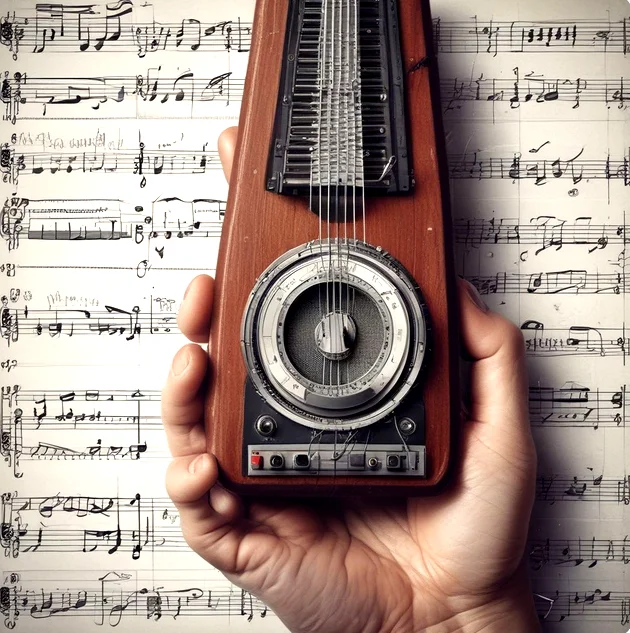
Ask almost any working musician about their relationship with a metronome, and you'll likely get some version of a complicated answer, respect mixed with genuine annoyance, an acknowledgment that the device is essential paired with a lingering memory of how tedious it felt to practice alongside one as a beginner. That steady, unglamorous ticking sound has a reputation for being one of the more frustrating tools in music education, and yet it remains one of the most consistently recommended practice tools across virtually every instrument and musical tradition, for reasons that go considerably deeper than simply "keeping time."
At its most basic level, a metronome produces a steady, unwavering pulse at a set tempo, typically measured in beats per minute, giving musicians an objective, external reference point to practice against. That objectivity turns out to be the entire foundation of why the device matters so much. Human perception of time and rhythm, even among trained musicians, is naturally imprecise and prone to subtle drift, speeding up during exciting or technically difficult passages, slowing down during quieter or more demanding sections, often without the musician consciously realizing their internal sense of tempo has shifted at all.
This phenomenon, sometimes called rushing or dragging depending on the direction of the drift, is remarkably common and genuinely difficult to self-diagnose without some kind of external reference. A musician can feel completely confident that they're maintaining a steady, consistent tempo throughout a piece, only to record themselves playing and discover significant fluctuation they had no conscious awareness of while actually performing. A metronome eliminates this blind spot entirely, providing a fixed, unemotional pulse that immediately reveals any inconsistency the moment a musician's internal timing starts to diverge from it, which is often an uncomfortable but genuinely necessary realization for developing musicians to confront directly.
Beyond simply catching timing errors, metronome practice plays a foundational role in building what musicians often refer to as internal time, essentially training a musician's own sense of rhythm to become more reliable and precise over extended practice, even when a metronome isn't actively playing. The process typically involves practicing a piece slowly and deliberately alongside a metronome at a manageable tempo, gradually increasing speed incrementally only once a passage can be played accurately and consistently at the current tempo, rather than attempting to play everything at full performance speed immediately and hoping timing naturally falls into place along the way.
This incremental, tempo-controlled approach to practice is particularly valuable for technically demanding passages, since playing something difficult too fast, too soon, tends to reinforce sloppy technique and inconsistent timing that becomes considerably harder to correct later, compared to building accuracy and consistency first at a slower, metronome-controlled pace and only gradually working up toward performance tempo once the underlying technique is genuinely solid. Musicians frequently describe this process as considerably less satisfying in the short term than simply playing through a piece at full speed repeatedly, but significantly more effective at producing reliable, consistent results over time.
Ensemble playing adds another important dimension to why metronome practice matters beyond individual technique. Musicians playing together, whether in a band, orchestra, or any group setting, need a shared, consistent sense of tempo to stay synchronized with each other, and individual practice habits developed with a metronome directly translate into a musician's ability to lock into a steady group tempo during rehearsal or performance, rather than unconsciously speeding up or slowing down in ways that create friction with other musicians trying to maintain a consistent shared pulse.
Modern metronomes, whether physical mechanical devices, electronic units, or smartphone apps, have expanded well beyond a simple steady tick, often including features like adjustable time signatures, accent patterns highlighting specific beats within a measure, and subdivision options breaking a single beat down into smaller rhythmic units, all designed to help musicians internalize increasingly complex rhythmic structures with the same objective precision a basic metronome provides for simple, steady tempo work. Despite this added sophistication, the underlying function remains essentially unchanged from the earliest mechanical metronomes developed in the early 19th century, providing an unwavering, external reference point that human rhythmic instinct alone consistently struggles to match without some form of regular, deliberate practice.
There's a reasonably well-known tension among musicians between metronome-trained precision and natural musical expression, since strict, mechanical adherence to a metronome's pulse during actual performance can sometimes strip away the subtle timing variations, slight rushes, gentle pulls back, that give expressive music its natural, human feel. Most musicians and teachers resolve this tension by treating metronome practice specifically as a foundational tool for building reliable technical control, a skill to be internalized and eventually applied more flexibly during actual expressive performance, rather than as a rigid framework meant to be followed with mechanical precision in every single performance context.
It's a small, unassuming device carrying an outsized role in musical development, less about making practice feel more mechanical and more about giving musicians an honest, objective mirror for something their own internal sense of rhythm is surprisingly bad at judging accurately on its own, steady, reliable time, held constant regardless of how a given passage happens to feel while actually being played.