
The Detective Who Turned Noticing Things Into a Science
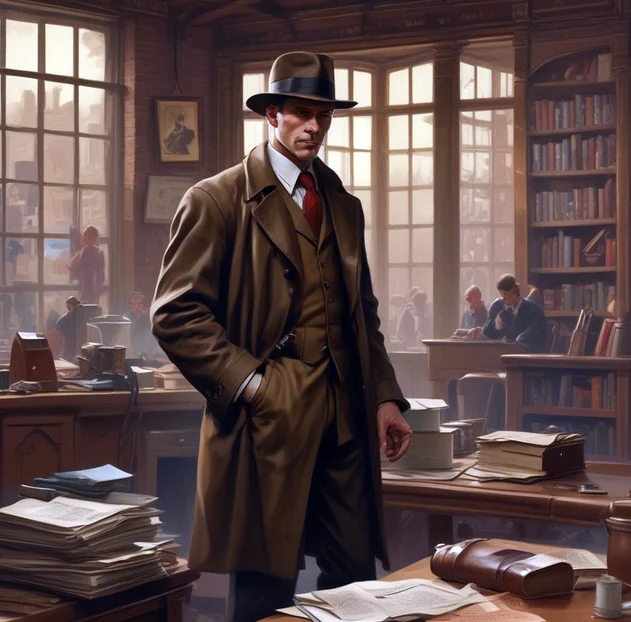
Which fictional detective is famous for solving mysteries primarily through observation and deduction? There's a particular kind of fictional detective who doesn't chase down criminals through brute force or luck, but instead solves cases by noticing details everyone else in the room walked straight past. Scuffed shoes, a particular type of mud, a slightly uneven callus on someone's hand, small physical clues that, pieced together with enough logical rigor, reveal an entire hidden narrative before anyone else in the story has even finished forming a theory. This character, first appearing in British detective fiction in the late 1880s, essentially defined what most people now think a brilliant detective is supposed to look like.
What made this style of detective genuinely different from earlier crime fiction was the deliberate emphasis on method over instinct. Rather than relying on gut feeling, coincidence, or a confession dramatically wrung out of a suspect, this character's entire approach was built around observation treated almost like a formal discipline, examining physical evidence with obsessive attention and then constructing logical chains of reasoning from those observations to arrive at conclusions that seemed, to everyone else present, almost impossible to have reached through ordinary thinking.
This investigative style is often loosely associated with deduction, though technically much of the reasoning involved leans closer to what logicians call abductive reasoning, working backward from observed evidence to the most probable explanation, rather than strict formal deduction in the pure logical sense. The character rarely bothered explaining this technical distinction to companions within the stories themselves, presenting conclusions instead as confident, almost theatrical demonstrations of logical inevitability, which became one of the character's most recognizable narrative habits, walking through the reasoning step by step only after already arriving at the answer, turning the explanation itself into a kind of performance.
Physical evidence played an outsized role in this detective's methodology compared to many contemporaries in earlier crime fiction, who tended to rely more heavily on witness testimony, motive, or straightforward police procedure. Tobacco ash, footprint patterns, ink stains, subtle details of clothing and posture, all became meaningful data points under sufficiently close examination, an approach that predated much of what would later become formalized forensic science by decades. The stories frequently emphasized close physical inspection of a crime scene as the starting point for solving a case, rather than treating physical evidence as secondary to interviews or confessions the way earlier detective fiction often did.
Companionship played an important structural role in the storytelling itself too, since this style of detective typically worked alongside a loyal associate whose primary narrative function was partly to ask the obvious questions readers themselves might be thinking, and partly to serve as the character through whose perspective the mysteries actually got narrated. This companion figure allowed the author to withhold the detective's full reasoning from the audience until the reveal, building suspense specifically around watching a brilliant mind work several steps ahead of everyone else present, including the reader.
The broader cultural influence of this detective archetype extends well beyond the original stories themselves. Countless later fictional investigators, across novels, television, and film, have borrowed heavily from this same basic formula, an unusually perceptive central character, a loyal companion serving partly as narrator, an emphasis on physical evidence and logical reasoning over pure intuition, and a signature moment near the end where the detective methodically walks everyone through exactly how the case was solved. Modern procedural dramas, amateur sleuth mystery novels, and even real-world forensic science education have all, in different ways, been shaped by this particular fictional template for what rigorous criminal investigation is supposed to look like.
Part of the character's lasting appeal comes from how satisfying the format itself is structurally, readers or viewers are given access to roughly the same clues the detective encounters, creating an implicit challenge to piece things together independently before the big reveal arrives, even though the detective almost always gets there first, and usually via a chain of observations more precise than most audiences would have caught on their own. That combination, fair-play clue distribution paired with a central character sharp enough to make audiences feel like they should have seen it too, became one of detective fiction's most durable and frequently imitated narrative structures, one that still shapes how mystery stories get written well over a century after the format was first popularized.