Spatial Reasoning Quiz: Cube Nets, Mirrors and Rotations
This spatial reasoning quiz tests how well you can picture shapes in your mind, with cube nets, a staircase of cubes, mirror images, an L shape turned 90 degrees, hidden triangles and squares, compass turns, paper folding and a mirror clock, plus a look at the mental rotation studies of Roger Shepard, the ideas of Howard Gardner and the Rubik's Cube. Ten questions.
Start Spatial Reasoning Quiz
🎯 Daily Trivia Challenge • 🧠 10 Questions • ⏱️ 90 Seconds
Cube nets
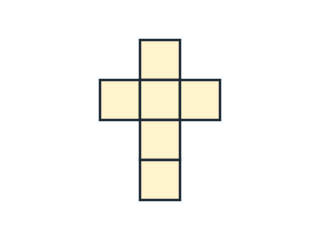
Can this flat pattern of six squares be folded into a closed cube?
Cube nets
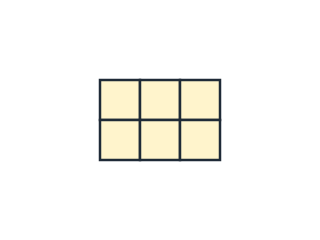
Can this 2 by 3 rectangle of squares be folded into a closed cube?
Counting cubes
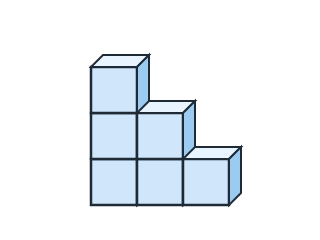
How many cubes are in this staircase?
Mirrors
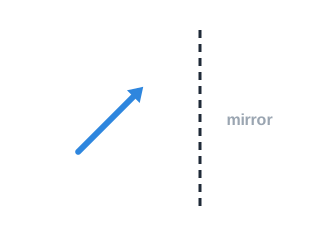
The blue arrow points up and to the right. What does it look like in the mirror?
Rotation
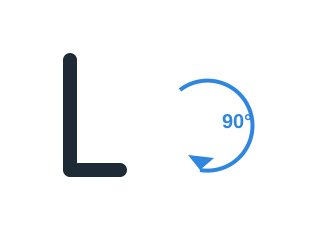
This L shape is turned 90 degrees clockwise. What does it look like now?
Counting shapes
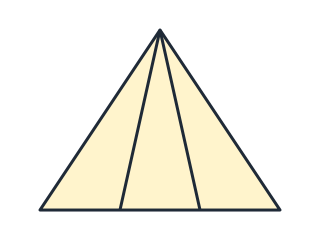
How many triangles of any size can you find in this picture?
Counting shapes
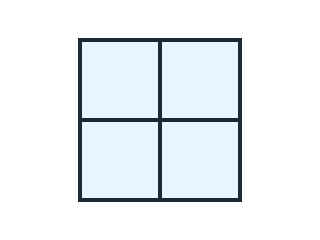
How many squares of any size are in this picture?
Directions
You face north, turn right, turn right again and then turn left. Which way are you facing now?
Paper folding
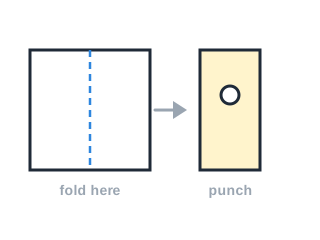
A square sheet is folded in half and one hole is punched through both layers. How many holes are there when you unfold it?
Mirrors
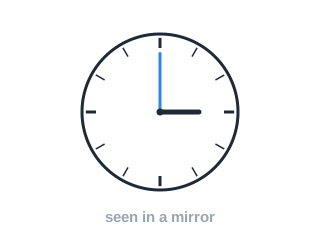
A clock seen in a mirror seems to show 3 o'clock. What time is it really?
Your score
0/10
Scroll down to see the explanation for each question.
Explanations: answer key for all 10 questions
- Q1: Can this flat pattern of six squares be folded into a closed cube?
Answer: Yes, it folds into a cube
This cross shape is the most common cube net. The four squares in the column wrap around, and the two side squares fold up to close the ends.
- Q2: Can this 2 by 3 rectangle of squares be folded into a closed cube?
Answer: No, it cannot
When folded, the squares in each row overlap instead of covering all six faces. A cube has 11 different nets, and the 2 by 3 rectangle is not one of them.
- Q3: How many cubes are in this staircase?
Answer: Six
The columns have 3, 2 and 1 cubes. Adding them gives 6 cubes, and no cubes are hidden behind the others.
- Q4: The blue arrow points up and to the right. What does it look like in the mirror?
Answer: An arrow pointing up and to the left
A mirror standing upright flips left and right but not up and down. So the arrow still points up, but now toward the left.
- Q5: This L shape is turned 90 degrees clockwise. What does it look like now?
Answer: A bar along the top with a leg going down on the left
Turning clockwise, the tall bar falls to the right and lies flat along the top, starting from the left. The foot, which pointed right, now points down at the left end.
- Q6: How many triangles of any size can you find in this picture?
Answer: Six
There are three small triangles, two made of two small ones side by side and one large triangle. That makes 3 plus 2 plus 1, or 6.
- Q7: How many squares of any size are in this picture?
Answer: Five
There are four small squares and one large square around them. Many people forget to count the big outer square.
- Q8: You face north, turn right, turn right again and then turn left. Which way are you facing now?
Answer: East
The first right turn faces you east, the second faces you south. Turning left from south brings you back to facing east.
- Q9: A square sheet is folded in half and one hole is punched through both layers. How many holes are there when you unfold it?
Answer: Two
The punch goes through two layers of paper at once. When the sheet is unfolded, each layer has its own hole, so there are two holes.
- Q10: A clock seen in a mirror seems to show 3 o'clock. What time is it really?
Answer: 9 o'clock
A mirror swaps left and right, so the hour hand that seems to point at 3 really points at 9. Mirror clock puzzles appear in many reasoning tests.
Spatial Reasoning Quiz – Turning Shapes in Your Mind
Spatial reasoning is the ability to picture objects in your mind and imagine how they move, turn, fold or fit together. You use it when you read a map, pack a suitcase, assemble furniture or park a car. Architects, engineers, surgeons, pilots and artists rely on strong spatial skills every day.
Psychologists have studied this skill for decades. In 1971, Roger Shepard and Jacqueline Metzler published a famous experiment on mental rotation. People were shown pairs of 3D shapes and asked whether they were the same. The bigger the angle between them, the longer people took to answer, as if they were really turning the shapes in their heads.
In 1983, the psychologist Howard Gardner described spatial intelligence as one of several kinds of intelligence in his book Frames of Mind. His idea that people can be strong in different ways, such as words, numbers, music or space, became popular with teachers around the world.
Typical spatial puzzles include cube nets, mirror images, rotations, paper folding, counting shapes inside a figure and following directions. Mirrors are a common trap: an upright mirror swaps left and right but not up and down. Counting puzzles reward slow, careful checking, because larger shapes made from smaller ones are easy to miss.
Toys and games are great training. The Rubik's Cube, invented by the Hungarian architect Ernő Rubik in 1974, Tetris, building blocks and jigsaw puzzles all exercise spatial thinking.
Research suggests that spatial skills improve with practice at any age. A few puzzles a day can make maps, diagrams and geometry much easier.
What This Quiz Teaches
This quiz is perfect for students, gamers and anyone who likes to build things.
- Which flat patterns fold into a cube
- How mirrors flip pictures
- Rotating shapes in your mind
- Counting hidden triangles and squares
- Paper folding and compass turns
- Roger Shepard, Howard Gardner and Ernő Rubik
Quick Facts About Spatial Reasoning
- A cube has exactly 11 different nets.
- Opposite faces of a standard die always add up to 7.
- Tetris was created by Alexey Pajitnov in 1984.
- The Rubik's Cube has more than 43 quintillion possible positions.
- Spatial puzzles appear in many engineering and pilot tests.
- Playing with building blocks helps children develop spatial skills.
Related Quizzes
Ready for another round?
Jump to a random quiz from the archive.