
Sega Built an Entire Mascot Just to Take Down Mario
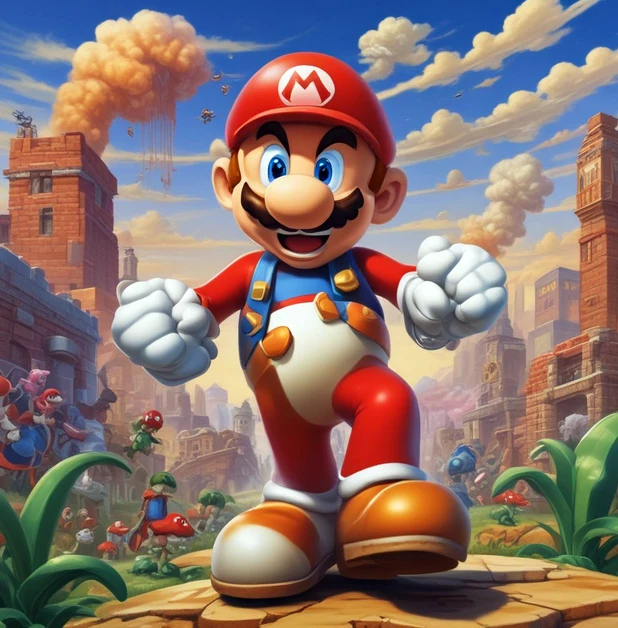
Most beloved animated and gaming characters get origin stories built around creative inspiration, a designer's personal vision, a random doodle that snowballed into something bigger. Sonic the Hedgehog has a considerably more competitive origin story. He wasn't dreamed up in a vacuum, he was engineered, deliberately and strategically, as Sega's answer to a problem the company desperately needed to solve: Nintendo's Mario was dominating the market, and Sega needed a mascot capable of going head to head with him.
By the late 1980s, Nintendo had built an overwhelming lead in the home console market, with Mario functioning not just as a game character but as the company's entire public identity, friendly, approachable, instantly recognizable even to people who'd never picked up a controller. Sega, competing directly against Nintendo with its own console hardware, recognized that hardware specs alone weren't going to win the battle, they needed a character capable of carrying the same kind of brand weight Mario carried for Nintendo, something audiences could immediately latch onto and associate specifically with Sega's identity rather than a generic in-house game series.
Sega's internal design process for what eventually became Sonic was notably deliberate and calculated, closer to a targeted product development exercise than pure creative inspiration. Designers reportedly considered numerous character concepts before settling on a hedgehog, ultimately choosing the animal specifically because its natural ability to curl into a ball offered a built-in gameplay mechanic, a fast, aggressive rolling attack that could visually and mechanically differentiate Sonic from Mario's slower, more methodical jumping-focused gameplay style. Speed became the character's defining trait almost by design necessity as much as creative choice, Sega needed something that felt fundamentally different from Nintendo's mascot, and leaning hard into velocity, sharp color contrast, and a noticeably more rebellious personality gave Sonic a clear identity distinct from Mario's warmer, more old-fashioned charm.
That personality distinction was entirely intentional too. Where Mario, an Italian plumber with a friendly, unthreatening design, projected approachability, Sonic was built around attitude, confidence, a certain visual edge, and an implied coolness meant to appeal specifically to an audience Sega believed Nintendo's softer branding wasn't fully capturing, particularly older kids and teenagers looking for something that felt a bit more rebellious than Nintendo's family-friendly image at the time. Marketing leaned heavily into positioning Sonic as edgier and faster paced, both literally in gameplay and in overall brand tone, directly contrasting against Mario at every opportunity.
The strategy worked well enough to genuinely reshape the console market for a period, Sonic became closely associated with Sega's Genesis console specifically, and the mascot rivalry between Sonic and Mario became one of gaming's most widely recognized corporate battles throughout the early 1990s, spilling into advertising campaigns that directly referenced each other, sometimes explicitly mocking the competing console or character in commercials and promotional material aimed squarely at winning over the same core audience.
What makes this particular rivalry-driven origin story notable is how successfully Sonic managed to escape feeling like a purely reactive, derivative creation despite being built explicitly to compete against an existing character. Rather than simply copying Mario's formula with a different skin, Sega's team used the competitive pressure specifically to differentiate their character as sharply as possible, resulting in a mascot with a genuinely distinct visual style, gameplay philosophy, and personality, one that managed to build a substantial, independent fan base and franchise longevity extending well beyond the original console war that inspired his creation in the first place.
Decades later, Sonic has outlived the specific console rivalry that originally justified his existence, evolving into a franchise with its own extensive game library, television series, and feature films, largely detached at this point from any ongoing direct comparison to Mario in most fans' minds. But the character's origin remains one of the clearer examples in entertainment history of a mascot built explicitly, deliberately, and strategically to compete against a specific rival, rather than emerging organically from pure creative instinct alone, a reminder that even some of the most beloved fictional characters occasionally start out as calculated moves on a corporate chessboard rather than as passion projects born purely from artistic inspiration.