
Putting Bread in the Fridge Actually Makes It Go Stale Faster
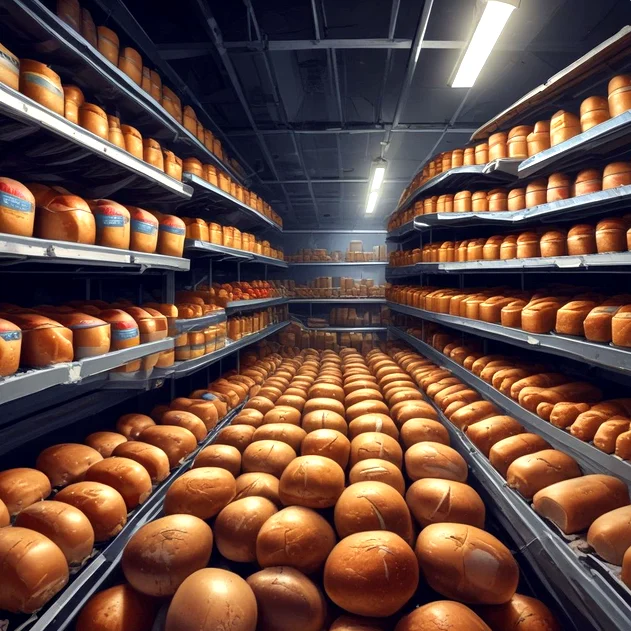
Why does bread become stale faster when stored in a refrigerator?
Refrigeration is supposed to be the universal answer to food lasting longer. Cold slows down bacterial growth, keeps produce crisp, and extends the life of pretty much everything from milk to leftovers. Bread breaks that pattern entirely. Toss a loaf in the fridge expecting it to stay fresh longer, and it'll actually turn stale and unpleasant faster than the exact same loaf left sitting on the kitchen counter at room temperature. It feels backwards, but the science behind it is fairly straightforward once you understand what staling actually is.
Going stale isn't really about bread drying out, which is the assumption most people default to. The real culprit is a process called starch retrogradation, and it's a structural, molecular-level change happening inside the bread itself rather than simple moisture loss. Bread is made largely from starch molecules that, during baking, absorb water and become soft and pliable through a process called gelatinization, which is exactly what gives fresh bread its soft, springy texture in the first place.
Once bread cools down after baking, though, those starch molecules don't just sit still in their soft, gelatinized state. Over time, they gradually realign themselves back into a more ordered, crystalline structure, slowly squeezing out some of the water that had been trapped between them during gelatinization. This recrystallization process is what actually causes bread to feel firm, dry, and crumbly as it stales, not primarily the bread losing moisture to the surrounding air, though some moisture loss does happen too and compounds the effect.
Here's where refrigeration becomes the problem rather than the solution. Starch retrogradation happens at dramatically different speeds depending on temperature, and counterintuitively, it happens fastest in a temperature range that sits well above freezing but below room temperature, right around typical refrigerator temperatures, somewhere in the range of just above freezing up to around ten degrees Celsius or so. Put bread in the fridge, and you're placing it directly inside the temperature zone where starch molecules recrystallize most aggressively, essentially accelerating the exact staling process people are trying to prevent by refrigerating it in the first place.
Room temperature, by contrast, actually slows retrogradation down compared to refrigerator temperatures, which is exactly why bread left out on the counter in a bread box or sealed bag tends to stay softer for longer than the same loaf stored in the fridge, despite feeling like the less "safe" storage option intuitively. The relationship between temperature and staling speed isn't linear or intuitive in the way most food storage advice assumes, and bread ends up being one of the clearest exceptions to the general rule that colder always means fresher.
Freezing, interestingly, works completely differently and actually solves the problem rather than worsening it. At freezer temperatures, molecular movement slows down so dramatically that starch retrogradation essentially stalls out almost entirely, which is why bread frozen shortly after baking and later thawed properly can taste remarkably close to fresh, having essentially skipped past the temperature range where staling happens fastest. This is part of why bakeries and grocery stores often recommend freezing bread for longer-term storage rather than refrigerating it, since freezing avoids the problematic middle temperature zone entirely rather than sitting directly inside it.
Humidity and how bread is wrapped play a role too, layered on top of the temperature issue. Bread stored in a sealed plastic bag traps moisture near the crust, which can lead to a softer, sometimes slightly gummy texture, while bread left uncovered dries out and hardens externally much faster, even if the internal starch retrogradation process is happening at a similar underlying rate either way. Neither extreme is ideal, which is part of why paper bags or specialized bread boxes, allowing some airflow while still offering partial protection, tend to strike a better balance for short-term storage than either fully sealed plastic or completely open exposure.
There's a reason this particular food science fact catches so many people off guard. Refrigeration has become such a default, automatic response to food storage that questioning whether it actually helps in a specific case rarely occurs to anyone. Bread turns out to be one of the rare, genuinely counterintuitive examples where the fridge, despite being colder and seemingly more protective, actively works against freshness rather than for it, all because of a molecular process most people have never heard of quietly working faster in exactly the temperature range refrigerators are built to maintain.