
What Is the Largest Country in the World?
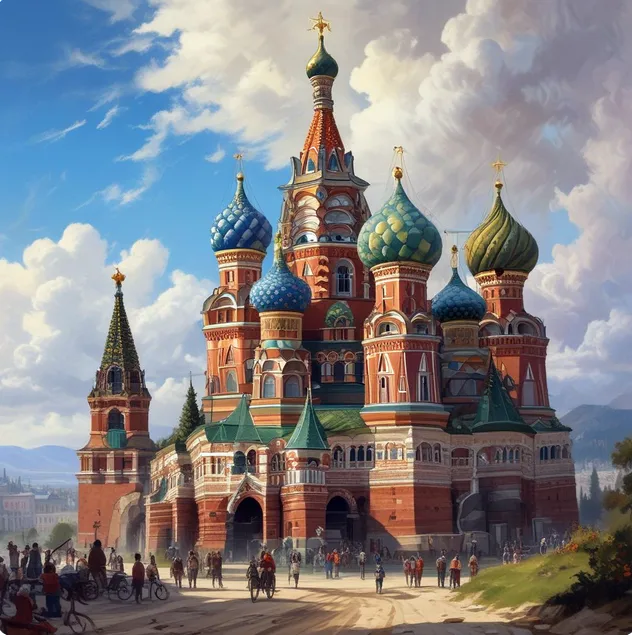
Russia is the largest country in the world, covering roughly 17.1 million square kilometers (about 6.6 million square miles). That's not a close race, either — Russia is bigger than the second- and third-largest countries combined, and it stretches across two continents, eleven time zones, and nearly 11% of Earth's entire landmass.
Canada takes second place at just under 10 million square kilometers, with the United States and China rounding out the next two spots — though which of those two actually ranks third depends on which agency you ask and whether inland water is counted.
Top 10 Largest Countries by Area
| Rank | Country | Total Area (km²) | Share of World's Land |
|---|---|---|---|
| 1 | Russia | ~17,098,242 | ~11% |
| 2 | Canada | ~9,984,670 | ~6.1% |
| 3 | United States | ~9,833,517–9,833,520 | ~6.1% |
| 4 | China | ~9,596,960–9,706,961 | ~6.3% |
| 5 | Brazil | ~8,515,767 | ~5.6% |
| 6 | Australia | ~7,692,024 | ~5.2% |
| 7 | India | ~3,287,263 | ~2.2% |
| 8 | Argentina | ~2,780,400 | ~1.9% |
| 9 | Kazakhstan | ~2,724,900 | ~1.8% |
| 10 | Algeria | ~2,381,741 | ~1.6% |
Together, these ten countries account for roughly 55% of all national land area on the planet — meaning fewer than 5% of the world's nations hold more than half its territory.
Quick Facts
- Russia's area is nearly twice the size of Canada, the second-largest country.
- Russia spans 11 time zones, more than any other country in the world.
- Canada is technically larger than the United States once its two million-plus lakes and inland waterways are counted, even though the U.S. has more dry land.
- Vatican City sits at the opposite extreme as the world's smallest country, covering just 0.44 square kilometers — Russia is roughly 39 million times its size.
- Algeria is Africa's largest country, and about 85% of its territory is Sahara desert.
Did You Know?
Did you know that Russia alone is larger than the entire continent of Antarctica? Its footprint on a map is so vast that it appears to touch nearly every major projection distortion — on a standard Mercator map, Russia looks close to the same size as Africa, even though Africa is actually about three times larger in real terms.
Did you know that Kazakhstan, the ninth-largest country, is big enough to cover most of Western Europe? It's also the largest landlocked country in the world, meaning it has no direct access to an ocean.
Did you know that France's mainland territory doesn't crack the global top 40, yet thanks to its overseas departments and territories scattered across the Caribbean, the Pacific, and the Indian Ocean, France controls the world's second-largest exclusive economic zone at over 11 million square kilometers of ocean?
Why Russia Is So Far Ahead
Russia's size traces back to centuries of eastward territorial expansion, starting with the growth of the Tsardom of Moscow and continuing through the Russian Empire's push across Siberia toward the Pacific. By the time that expansion settled into modern borders, Russia had absorbed a landmass stretching from the Baltic Sea in the west to the Bering Strait in the east — close enough to Alaska that the two countries are separated by only a few kilometers of water at their nearest point.
Geographically, Russia sits across two continents. Most of its landmass lies in Asia, though the bulk of its population and its political center are concentrated in the European portion, west of the Ural Mountains. That split is exactly why Russia gets counted as Europe's largest country in most rankings, even though the majority of its territory technically falls in Asia — with China then typically credited as Asia's largest country by area instead.
Total Area vs. Land Area: Why the Numbers Shift
Country-size rankings aren't as fixed as they might seem, mainly because of how "area" gets defined. Total area includes inland water — lakes, rivers, and reservoirs — while land area strips that out entirely. That distinction barely matters for most countries, but for a few, it flips the entire ranking.
Canada is the clearest example. Its more than two million lakes push its total area above the United States, even though the U.S. actually has more dry land. Depending on which convention a source uses, Canada, the U.S., and China can swap positions in the third-and-fourth-place tier. Encyclopedia Britannica, for instance, places China third and the U.S. fourth, while the CIA World Factbook and the UN often show the U.S. ahead of China instead.
Semantic Deep Dive: Related Questions People Ask
What is the second-largest country in the world? Canada, with a total area close to 10 million square kilometers — making it roughly 1.6% larger than the United States once inland water is included.
What is the largest country in Europe? Russia holds that title by a wide margin, even though most rankings treat it as culturally and politically distinct from the rest of the continent. Excluding Russia, Ukraine is the largest country on mainland Europe.
What is the largest country in Asia? China is usually cited as Asia's largest country, since Russia — despite having more territory physically located in Asia — tends to get classified as European.
What is the largest country in Africa? Algeria, at roughly 2.38 million square kilometers, the majority of which is Saharan desert.
What is the largest landlocked country? Kazakhstan, which has no coastline on any ocean despite ranking among the world's ten largest countries by area.
Is Russia bigger than Pluto? This comparison shows up often in trivia circles: Russia's surface area is actually larger than the surface area of the dwarf planet Pluto, which covers about 17.7 million square kilometers — putting the two in roughly the same range.
Size Doesn't Always Mean Population
Having the most territory doesn't translate into having the most people. Russia, despite its enormous landmass, ranks outside the world's top eight most populous countries. Canada and Australia — both in the global top six by area — have relatively small populations spread across huge distances, giving them some of the lowest population densities anywhere. Meanwhile, countries like India and Bangladesh pack hundreds of millions of people into a fraction of Russia's footprint. Land area and population size turn out to be almost entirely independent measures of a country's scale.