
What Is the Capital of the United States?
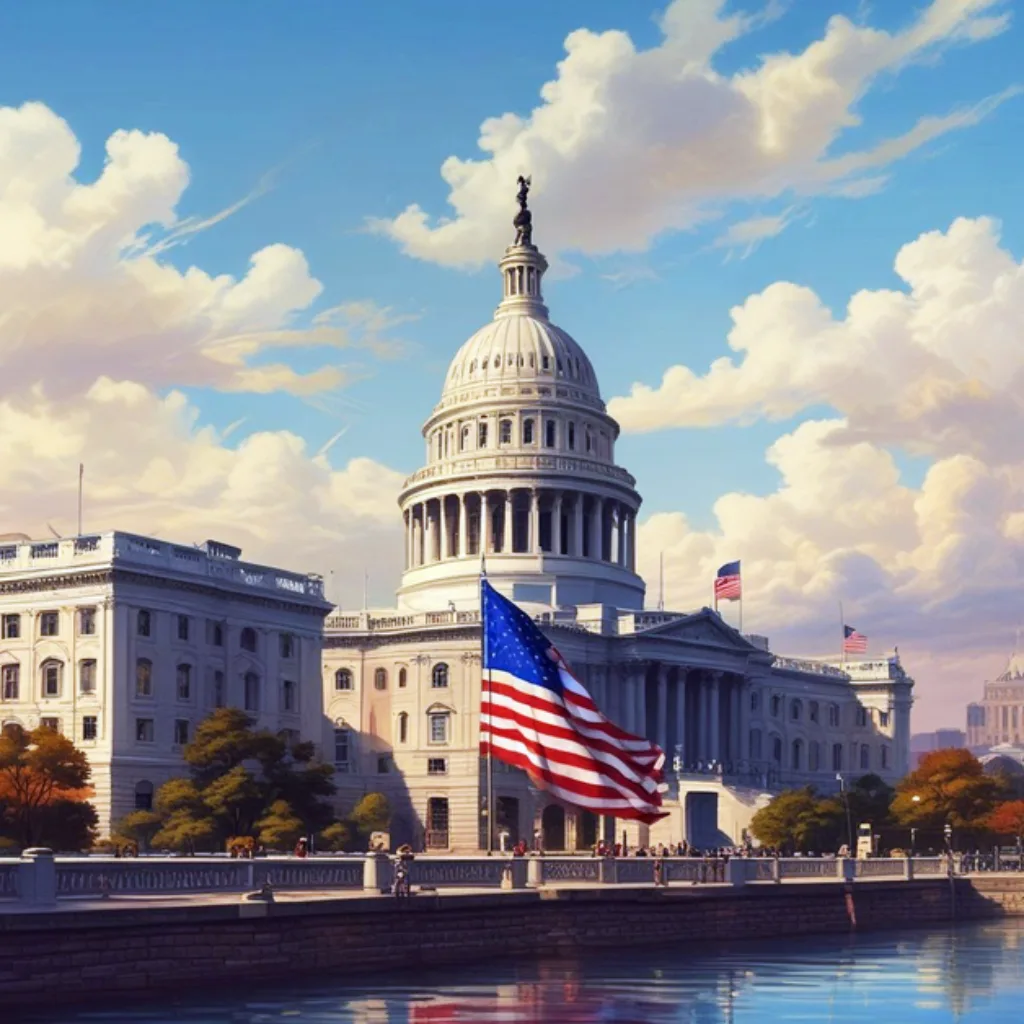
Washington, D.C. is the capital of the United States. Unlike almost every other national capital on the planet, it wasn't an existing city that simply gained political importance over time — it was built from scratch, on land specifically set aside for the purpose, because the young country's leaders couldn't agree on using any city that already existed.
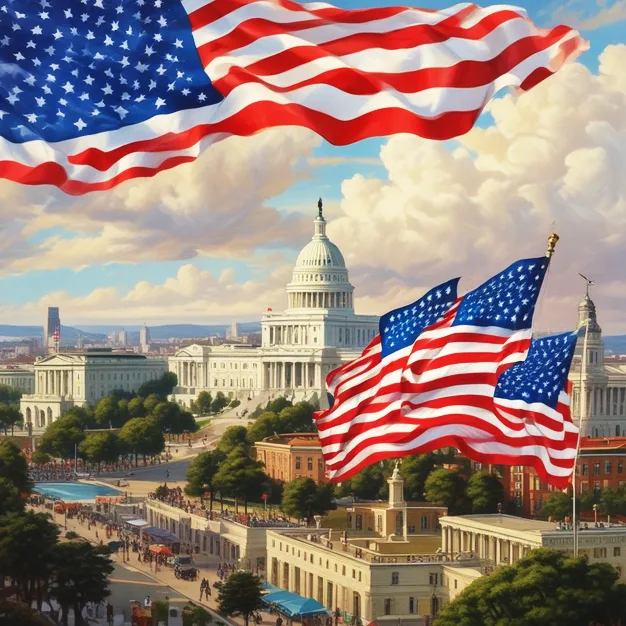
"D.C." stands for the District of Columbia, a federal district rather than a state. That distinction matters more than it might sound: Washington isn't part of Maryland, Virginia, or any other state. It answers directly to Congress, a setup the framers wrote into the Constitution deliberately, so that no single state could claim outsized influence by hosting the seat of national power.
Quick Facts
- Washington, D.C. was established as the nation's capital on July 16, 1790, under the Residence Act.
- The city's population runs around 700,000 as of 2026, while the broader Washington metro area holds roughly 6.3 million people, making it one of the largest metro areas in the country.
- President John Adams became the first president to live and work there, moving in on November 1, 1800.
- The land for the district was ceded jointly by Maryland and Virginia, though the Virginia portion was later returned to that state in 1846.
- D.C. residents pay federal taxes and serve in the military, yet the district has no voting representation in Congress — an issue that remains actively debated in U.S. politics today.
A Deal Struck at a Dinner Table
Picking a capital wasn't a simple matter of geography for the newly independent United States — it was tangled up with one of the most contentious financial disputes of the era. Alexander Hamilton wanted the federal government to absorb state debts left over from the Revolutionary War, a plan that mostly benefited northern states already carrying lighter debt loads. Southern states, wary of expanding federal power, pushed back hard, and the disagreement stalled Congress entirely.
Thomas Jefferson, James Madison, and Hamilton eventually hashed out a resolution over dinner in June 1790 — an episode now remembered as the Compromise of 1790. Southern representatives would support Hamilton's debt plan, and in exchange, the permanent capital would be placed along the Potomac River, in territory friendlier to southern interests than New York or Philadelphia. Congress passed the Residence Act that July, giving President Washington himself the authority to select the exact site.
Building a Capital From Nothing
Choosing the location was only step one. Maryland and Virginia both ceded land to form the new federal district, and French-born architect Pierre Charles L'Enfant was brought in to design the city's layout — wide diagonal avenues, ceremonial vistas, and space reserved for grand government buildings, a plan still visible in the city's bones today. Progress was slow. Funding ran short, construction dragged, and Philadelphia continued serving as the temporary capital for the full decade the Residence Act allowed.
By November 1800, the city was ready enough for the government to move in. John Adams became the first president to occupy what would later be called the White House, officially transferring the seat of government to its new, purpose-built home.
A City Reshaped by Its Own History
Washington's early decades were modest — a small, muddy, half-finished city that bore little resemblance to the monumental capital it later became. The Civil War changed that trajectory. Slaves held within the district were emancipated on April 16, 1862, months ahead of the Emancipation Proclamation, and the city quickly became a destination for freed Black Americans seeking opportunity and safety, including figures like Frederick Douglass. That legacy is still visible in D.C.'s demographics today, where Black residents remain the largest single racial group in the city.
Post-war growth pushed the city well past L'Enfant's original boundaries, eventually absorbing neighboring Georgetown and expanding into the sprawling metro area that surrounds the federal core today.
Washington, D.C. by the Numbers
| Fact | Detail |
|---|---|
| Capital established | July 16, 1790 |
| First president to reside there | John Adams, November 1800 |
| City population (2026 est.) | ~700,000 |
| Metro area population | ~6.3 million |
| Status | Federal district, not a state |
| Land ceded by | Maryland and Virginia (Virginia's portion returned in 1846) |
Did You Know?
Virginia's original contribution to the district didn't stay part of D.C. forever — Congress returned that land, including present-day Arlington and Alexandria, back to Virginia in 1846, shrinking the district to roughly its current boundaries.
D.C.'s population today is larger than that of both Vermont and Wyoming, a fact frequently cited in ongoing debates over whether the district should gain full statehood and voting representation in Congress.
The city's license plates carry the slogan "End Taxation Without Representation," a pointed reference to the fact that D.C. residents pay federal taxes and serve on juries and in the military without having a voting member in either chamber of Congress.
Semantic Deep Dive: Related Questions People Ask
Why isn't Washington, D.C. a state? The framers deliberately created a federal district separate from any state, reasoning that the seat of national government shouldn't fall under one state's authority. That structure has never changed, though proposals for D.C. statehood have been debated and voted on in Congress in recent years, without becoming law so far.
Was there ever a different U.S. capital before Washington, D.C.? Yes, several. Philadelphia served as the temporary capital while Washington was being built, and earlier sessions of Congress met in cities including New York and Philadelphia during the years just after independence.
Who designed the layout of Washington, D.C.? Pierre Charles L'Enfant, a French-born architect and engineer, drew up the city's original plan of broad avenues and ceremonial spaces, much of which still shapes downtown Washington today.
Does anyone live in Washington, D.C. besides government workers? Overwhelmingly, yes. Federal employees make up only a small share of the roughly 700,000 people who call the district home; the rest are residents living across the city's neighborhoods with no direct connection to federal government work.
How is Washington, D.C. governed if it's not a state? Under the Home Rule Act, D.C. elects its own mayor and city council, but Congress retains the authority to review and override local legislation — a level of federal control no U.S. state answers to.
A Capital Built to Belong to Everyone and No One
Washington's origin story sets it apart from almost every other capital city in the world. It wasn't a trading hub, a royal seat, or a city that simply grew into political importance — it was a compromise made physical, carved out of two states specifically so that no single state could claim it. More than two centuries later, that founding logic still defines the district's unusual status: central to American political life, yet governed by rules that set it apart from every state surrounding it.