
Bananas Are Mildly Radioactive, and Yes, That's Completely Normal
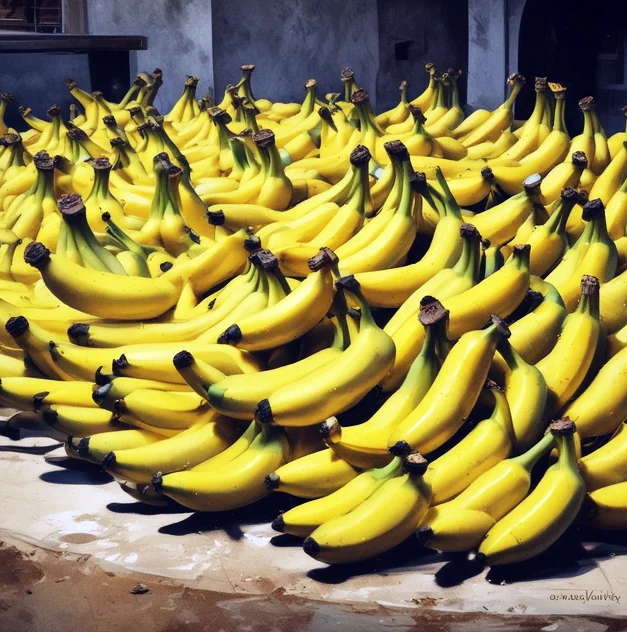
Which common fruit naturally contains small amounts of radioactive potassium?
Bananas have a strange little reputation in physics circles that most people never encounter unless they happen to take a nuclear science course or fall down a very specific corner of the internet. They're radioactive. Not dangerously so, not in any way that should change how anyone eats breakfast, but genuinely, measurably radioactive, and the reason comes down to a naturally occurring element that shows up in a lot more of everyday life than most people realize.
Bananas are unusually rich in potassium, which is exactly why they're constantly recommended as a good dietary source of the mineral, important for muscle function, nerve signaling, and maintaining healthy blood pressure. What most people don't think about is that potassium, as it exists in nature, isn't a single uniform substance. It's made up of multiple isotopes, variations of the same element with slightly different atomic structures, and one of those naturally occurring isotopes, called potassium-40, happens to be radioactive.
Potassium-40 makes up only a tiny fraction of all naturally occurring potassium, roughly a fraction of a percent, but because potassium itself is so abundant in biological material, and bananas contain so much of it, that small radioactive fraction is enough to make bananas measurably, if extremely faintly, radioactive. This isn't some contamination issue or environmental exposure problem either, it's baked into the fundamental chemistry of potassium itself, meaning every banana that has ever existed, grown anywhere on the planet, carries this same trace radioactivity as a basic property of what it's made of.
This phenomenon is common enough in scientific and educational circles that it actually has an informal nickname: the banana equivalent dose, a unit occasionally used, mostly for illustrative and educational purposes rather than rigorous scientific measurement, to help put small amounts of radiation exposure into a relatable, everyday context. The idea is to compare tiny radiation doses from things like medical scans or background environmental exposure to the radiation from eating a single banana, since most people have no intuitive sense of what a unit like a millisievert actually feels like in practical terms, but everyone understands what a banana is.
To be clear about scale here, because it matters enormously: the radiation dose from a single banana is astonishingly small, so small that the human body doesn't even meaningfully register it as an additional radiation source worth worrying about. Humans are already naturally exposed to background radiation constantly, from cosmic rays, from radioactive elements in soil and rock, even from other radioactive isotopes already present inside our own bodies, since potassium-40 isn't just in bananas, it's in essentially all living tissue, human bodies included, as a completely normal part of biological chemistry. Eating a banana doesn't meaningfully add to your total radiation exposure in any way that matters biologically, and there's no scenario, short of eating an genuinely absurd, physically impossible quantity of bananas, where banana consumption would pose any real radiation risk.
Bananas aren't unique either, they just happen to be the most commonly cited example because of how strongly associated they are with potassium in popular nutrition knowledge. Plenty of other potassium-rich foods, like potatoes, spinach, and various beans, carry the exact same trace radioactivity for the exact same underlying chemical reason, they just never got the same catchy nickname or cultural attention bananas did.
Interestingly, this natural radioactivity occasionally causes minor, mostly amusing real-world complications. Large shipments of bananas have, on rare documented occasions, triggered sensitive radiation detectors at ports, border crossings, or waste facilities designed to catch far more serious radioactive materials, simply because the cumulative potassium-40 across an enormous shipment of bananas registers as a faint signal on extremely sensitive equipment. These false alarms are well understood within the industries that deal with radiation detection, common enough that they're specifically accounted for in how detection thresholds get calibrated, rather than treated as a genuine security concern each time.
It's a small, almost funny reminder that radioactivity isn't some rare, exotic phenomenon confined to nuclear power plants and warning-labeled equipment. It's woven quietly into ordinary biology and everyday food, present in harmless trace amounts in something as unremarkable as the banana sitting on a kitchen counter, doing nothing more dramatic than slowly ripening next to a bowl of equally, faintly radioactive potatoes.